The Context
This work was completed as a W2 position at Cinetopia, a luxury theater chain based in the Pacific Northwest. It is included here as representative of the scale, technical complexity, and studio-level creative work that informs how Fourside Studios approaches motion graphics and branded content today.
The Client
Cinetopia was not a typical movie theater. Founded in 2005 in Vancouver, WA, it was widely considered the most premium theatrical experience in the country before its acquisition by AMC in 2019.
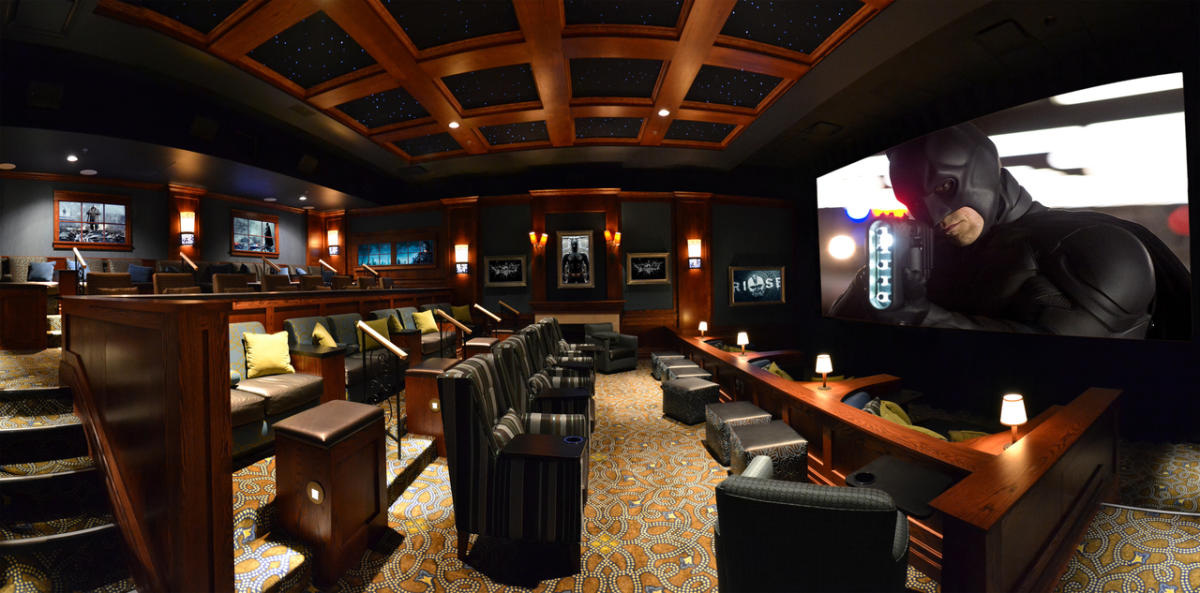
What set Cinetopia apart was how seriously it took the environment around the film. Lobbies featured TV screens instead of printed movie posters. Theaters were designed as immersive spaces themed to whatever was playing. The flagship experience was the Movie Parlor: an intimate, living room-style theater with couches, armchairs, and full food and drink service, surrounded by a synchronized 12-screen matrix that wrapped the back and side walls of the room, plus 5 additional individual screens. The content on those screens was not decoration. It was part of the experience.
Cinetopia operated four locations, three of which this work covered:
- Progress Ridge in Beaverton, OR (adjacent to a lake, 12 to 14 screens)
- Vancouver Mall in Vancouver, WA (23 screens, highest grossing theater in Oregon and Southwest Washington)
- Overland Park in Overland Park, KS (17 screens, the chain’s first location outside the Pacific Northwest)
The Challenge
Managing motion graphics content across a premium, technology-forward theater chain at this scale is not a solved problem. Each location had unique screen configurations. The Movie Parlors required fully realized environments that could make a room feel like part of a specific film. The lobby displays needed animated content that looked like it belonged in a premium space, not a standard multiplex.
The studios providing source material were not set up to hand off production-ready files for this kind of use. They provided raw Photoshop files from their marketing teams and expected finished content to come back for approval before anything was displayed. The approval process added a layer of coordination that most vendors would not have been equipped to handle while also managing content at this volume.
Over the course of three years, the team shrank from three people to one. The work did not.
What Was Built
Lobby Display System
Cinetopia replaced traditional printed movie posters with TV screens throughout the lobby — an approach that was genuinely ahead of the industry at the time. Animated movie posters were created for each current release using raw Photoshop files provided directly by the studios. The finished animations had to match the studios’ brand standards and pass approval before going live.
Movie Parlor Environments
Each Movie Parlor featured a 12-screen synchronized matrix wrapping the back and two side walls of the room, along with 5 additional individual screens that ran independent content. Motion graphic environments were created for these screens to transform the room into the world of the specific film being shown. Not a generic mood or genre treatment. A fully realized environment built around that movie. For The Martian, characters moved across the surface of Mars. Every film got its own world.
The Overland Park Tunnel
The Overland Park location included a large walk-through tunnel connecting the entrance to the ticket taker. The tunnel featured a 10-projector matrix system that projected custom motion graphic environments across the back and side walls. Every guest passed through it on the way into the theater.
For the Fantastic Four release, the tunnel became the film. Each of the four characters was placed throughout the environment using their powers, with background elements fully animated to bring the world to life around them. Guests were not walking past a movie poster. They were walking through the movie before they ever reached their seat.
It was one of the most technically ambitious immersive display environments in any commercial entertainment venue at the time.
System Management and Scheduling
Building the content was only part of the job. The entire display system across all three locations was maintained and scheduled from end to end. That meant managing the hardware, building out the scheduling logic, and making sure the right environment was running on the right screens at the right time.
The system was built around the show schedule. When a film was playing, its environment ran in the parlor. Thirty minutes before showtime, the themes would automatically transition to match whatever was on next, even if the theater had changed what film was playing in that room. When the movie started, every screen turned off.
That level of automation required the scheduling system to be reliable enough to run without intervention across hundreds of screens in multiple states. It was. The experience and problem-solving that went into building and maintaining that infrastructure is the same foundation behind the smaller custom display system built since.
Scale
Content was managed across more than 500 screens total across all locations. While much of the content was shared across screens, each environment required tailoring to its specific configuration and context.
The Studio Relationship
Most studios were handled under general production practice. 20th Century Fox was the exception.
Fox’s marketing team engaged directly in the approval process, providing raw layered Photoshop files and reviewing finished motion graphics before content was cleared for display. This required coordinating creative revisions under studio timelines while managing content production for multiple other films simultaneously.
Films completed under the Fox approval process included:
- Fantastic Four (2015)
- The Martian (2015)
- Dawn of the Planet of the Apes (2014)
- Gone Girl (2014)
- The Fault in Our Stars (2014)
The Takeaway
At its peak, this was a one-person content operation managing over 500 screens across three luxury theater locations, producing studio-approved motion graphics for a major Hollywood studio, and building immersive environments that guests experienced before they ever sat down in a seat.
The concept Cinetopia was built on — that the space around the film is part of the experience — is exactly the same belief that drives how Fourside Studios approaches every production. The screen is only part of the story.
Note: Cinetopia was acquired by AMC in May 2019. All locations have since been rebranded or closed.